
Hakki Pilke Splitting Wedges – More Efficient Splitting with the Right Wedge
The splitting wedge has a significant impact on a firewood processor’s efficiency, the splitting force required and the quality of the firewood produced. When choosing a wedge, it is important to consider not only the desired firewood size but also the wedge’s design, sharpness and the type of wood being processed.
All Hakki Pilke splitting wedges are made from durable Hardox steel.
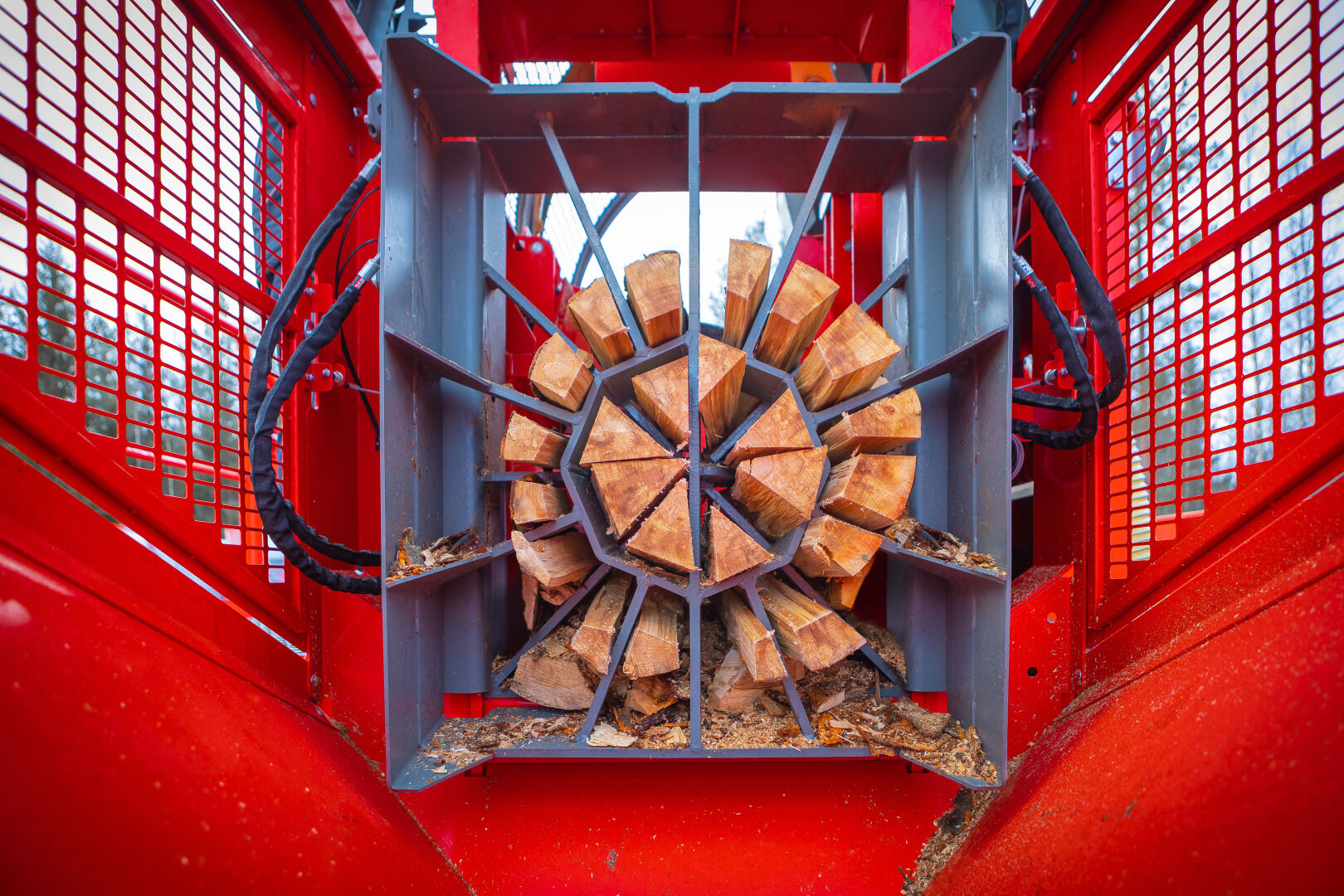
HakkiMultiBlade™ splitting system in the Hakki Pilke 55 Pro firewood processor.
Different Splitting Wedges for Different Needs
Depending on the model, Hakki Pilke firewood processors are available with 2/4-, 6-, 8-, 12- and 16-way splitting wedges. On the Hakki Pilke 55 Pro, designed for large-scale professional production, the HakkiMultiBlade™ system makes it possible to split a log into up to 24 pieces.
The right splitting wedge is chosen based on the diameter of the logs being processed and the desired firewood size. A wedge with fewer splitting sections is often sufficient for smaller logs, while a multi-way wedge makes it possible to produce suitably sized firewood from larger logs in a single splitting cycle.
How Does Wedge Design Affect the Splitting Force Required?
The performance of a splitting wedge depends on more than the number of blades. Their shape, angles and positioning also play an important role.
A shallower sharpening angle reduces the force needed to split wood, but the thinner cutting edge is more prone to wear and requires more frequent maintenance. A steeper sharpening angle, on the other hand, improves durability but increases the splitting force required.
Staggering, or offsetting, the blades also affects splitting efficiency. When the blades are positioned at different depths, the log splits in stages rather than all at once. This reduces the peak force required and helps keep the splitting process under control.
Designing a splitting wedge therefore involves balancing efficient splitting, durability and structural limitations. Carefully designed wedge geometry reduces the splitting force required, placing less stress on the machine’s structure and hydraulic system. This helps ensure a long service life for the machine and its components.
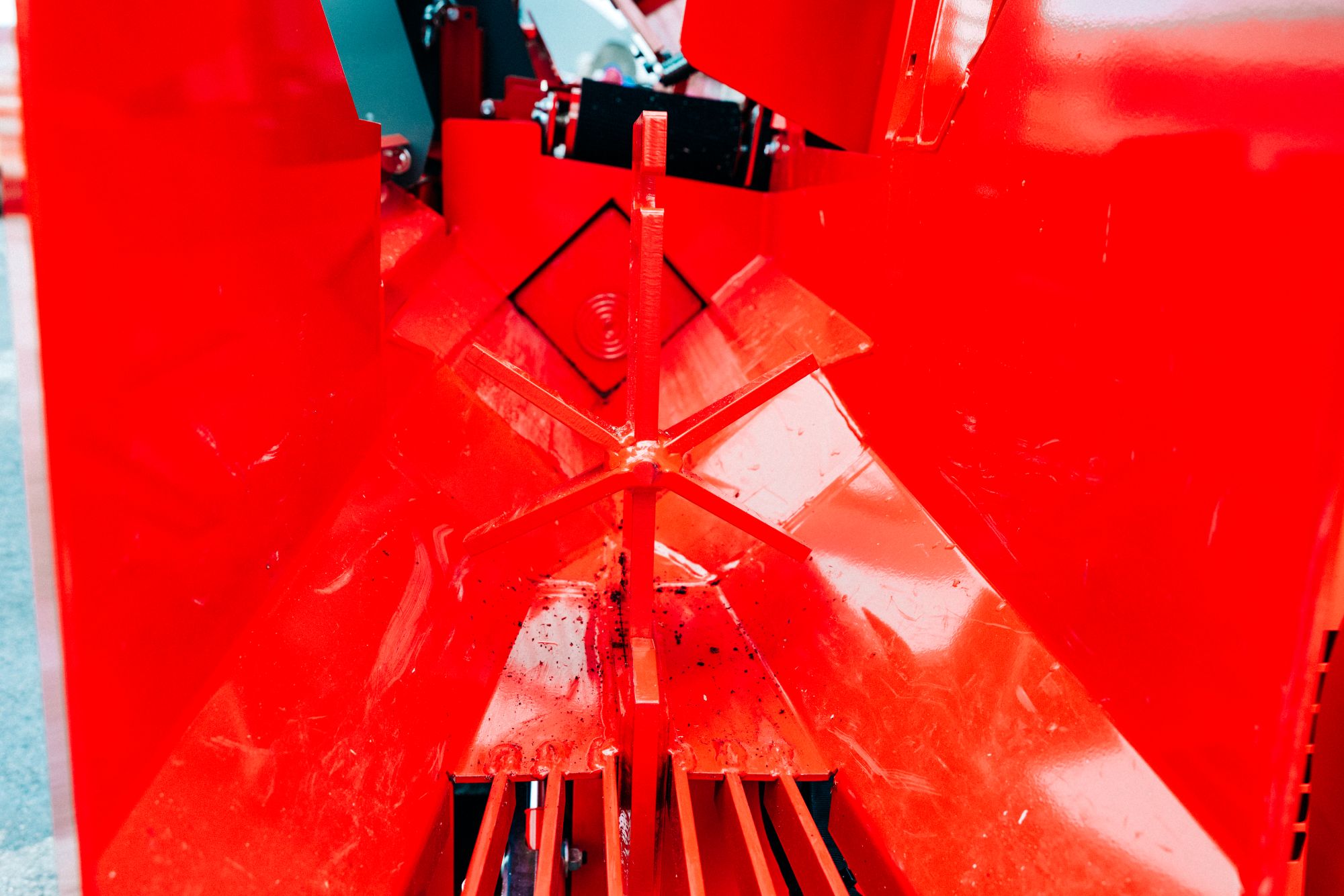
Splitting wedge for the Hakki Pilke CS30 Pro.
A Sharp Splitting Wedge Also Protects the Machine
The condition of the wedge directly affects the load on the firewood processor. A blunt splitting wedge requires more force to split a log, increasing the stress on the machine’s frame and splitting mechanism with every cycle.
Regularly inspecting the condition of the wedge helps maintain splitting efficiency and reduces unnecessary stress on the machine. Under normal operating conditions, the splitting wedge does not need sharpening. Sharpening may become necessary if a hard object in the wood, such as a nail, damages the cutting edge. If the wedge becomes bent, it must be repaired or replaced.
Choosing the right splitting wedge and keeping it in good condition are essential for efficient firewood production. Explore the splitting wedge options available for different Hakki Pilke models in their technical specifications and ask your dealer which solution best suits your needs.