
Burning fresh or otherwise damp wood is not energy efficient, so it hurts your wallet. In addition, burning damp wood causes significantly more emissions than burning properly dried wood. When burning damp wood, energy is wasted on evaporating water, which directly detracts from the heat produced by the firewood. Therefore, it is worth paying attention to the drying and storage of firewood to make heating as efficient and environmentally friendly as possible.
Dry firewood burns economically and environmentally friendly
Proper drying of firewood ensures firewood quality and facilitates its transport. In commercial production, drying firewood is an important part of the production process, and its careful implementation speeds up the process and thus generates savings. You can read more about the topic on our blog how to produce cleaner firewood.
The moisture content of the most common tree species in Finland is approximately 40–55 % when fresh, while the recommended moisture content for firewood is 15–20 %. When the moisture content is correct, the wood burns cleanly and produces heat energy as efficiently as possible. In this case, lighting and burning firewood is also easy, economical, and environmentally friendly. Carefully dried wood also does not become moldy during storage.
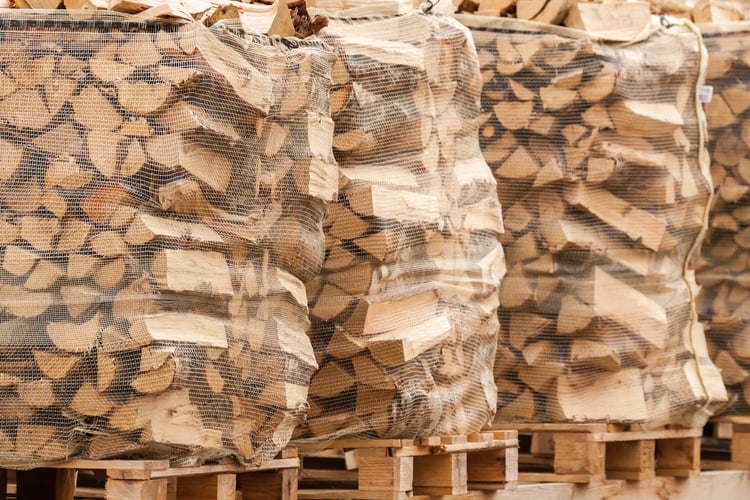
In Finland, it is a good idea to dry firewood outdoors from March to May.
In Finland, many use traditional firewood drying methods, also known as natural drying. From March to May, natural drying is usually efficient in Finland thanks to the wind and sun. During other months, the relative humidity is often high, which makes drying firewood outdoors more difficult and may compromise the quality of the firewood.
If you want to produce dry firewood year-round, artificial drying is usually needed to support the process. Especially for commercial operators, enabling year-round drying Artificial drying, meaning a cold or hot dryer, is often also an economically sensible choice.
You should under no circumstances attempt to dry firewood in an enclosed space, as it slows down the drying process, reduces the quality of the firewood, and increases the risk of the wood molding. An airy woodshed works well for drying firewood, but air drying in firewood bags or crates is usually even more efficient. They also make it easier to move and transport the firewood when needed. The right kind of firewood bags are made of highly breathable material, and the firewood dries in them quickly and easily.
Once the wood has been dried, it is a good idea to check its moisture percentage before use. A moisture meter works best for this, which are sold at quite affordable prices in, for example, hardware stores and department stores.
You can find more tips on drying firewood From the Finnish Forest Centre's wood fuel drier guide.
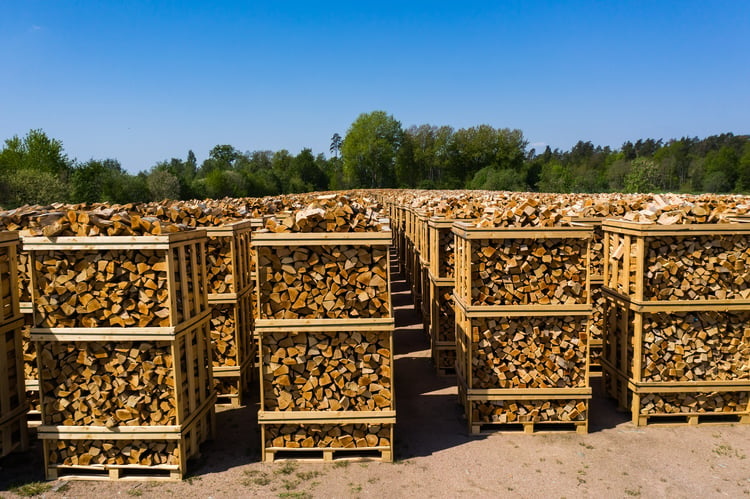
Proper storage of firewood
When storing firewood, it is important to ensure that dried wood also stays dry. Therefore, the very first thing is to make sure the wood is stored protected from rain, for example in a woodshed or under a tarp. If you decide to store firewood under a tarp, you should keep in mind that the wood must not be covered too tightly. In that case, moisture will condense and the firewood will easily mold.
The most important rule of thumb when describing and storing firewood is that the wood should always be stored in a well-ventilated manner. For example, in a good woodshed, air circulates through gaps in the floor, walls, and roof. Therefore, the structure must not be airtight, but rather designed so that it protects the wood from rain while being well-ventilated from all directions.
If you store firewood under a tarp against a building wall, for example, it is worth remembering that firewood harbors many types of microbes, and it may also contain mold or moisture. This can be a risk to the building and even cause structural damage.
Remember to be careful with the fire hazard
Stacking firewood under a tarp against a building wall or, for example, in a carport is also a fire hazard. In a fire, wood piled next to a building intensifies the fire, accelerates its spread, and makes firefighting operations more difficult. Therefore, it is advisable to store firewood safely farther away from residential buildings.
The best place to store firewood is an airy woodshed where the wood can dry and stays very dry after drying. However, fire safety and related regulations must also be considered when it comes to outdoor firewood storage. The firewood storage must be located more than eight meters away from buildings and four meters away from the property boundary. Remember to also consider any buildings that may be on the other side of the boundary and maintain a sufficient distance from them.
It is not advisable to store more than a small amount of firewood indoors, so it is best to bring the wood inside only 1–2 days before burning it. This allows the surface of the wood to dry indoors while keeping other risks low.
If you want to store more than 0.5 m3 of firewood indoors, it must be kept in a separate, compartmentalized room. In small residential buildings, compartmentalized rooms are typically the boiler room, garage, and fuel storage room. These rooms have their own structural material and fire class requirements. In addition, it is worth noting that even in a compartmentalized garage, firewood and motor vehicles must not be stored at the same time.
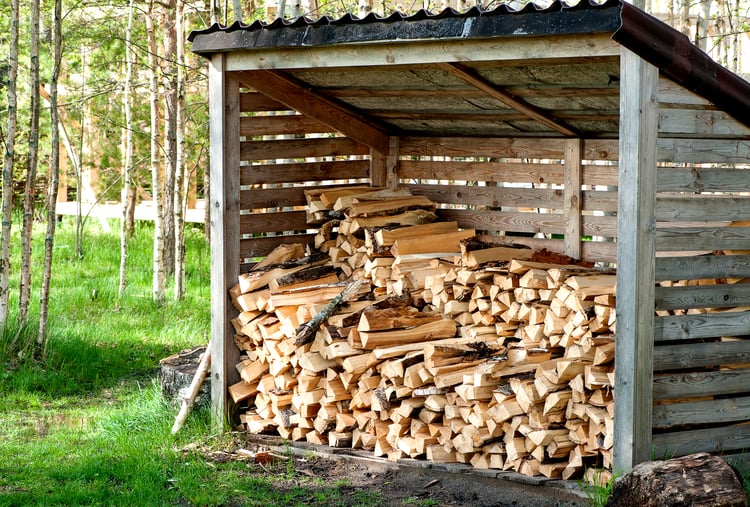
Tips for storing firewood:
- Do not store firewood against the wall of a residential building, as it is a fire hazard and can also cause structural damage to the building.
- Store firewood indoors only in small amounts at a time. A good rule of thumb is to bring indoors only the amount that you will burn within a few days.
- If firewood is stored indoors for more than 0.5 m3, they must be stored in a separate, compartmentalized space.
- Do not store firewood directly on the ground without dunnage
- Do not cover the firewood too tightly so that moisture cannot condense and the wood does not mold.